
How AI Analyzes Dating Photos (and What It Actually Looks At)
Table of contents
- What AI dating photo analysis actually is
- The eight signals every photo is read on
- How the ranking is built
- What a real analysis report looks like
- What AI photo analysis cannot do
- When an AI analysis is worth running
- FAQ
AI dating photo analysis is the fastest way to turn a folder of candidate photos into a ranked, actionable lineup. But the phrase covers a wide range of tools, from simple attractiveness scorers to full per-photo reviews. This guide explains what ProfileFixAI's analysis actually does, the eight signals every photo is read on, how the ranking is built, and what a real report looks like — so you know exactly what you are getting and what you are not.
What AI dating photo analysis actually is
At its core, an AI dating photo analysis reads each photo you upload and tells you, in plain language, what is helping or hurting it in the first second a viewer looks. The goal is not to score how attractive you are. It is to surface the visual signals a viewer uses to decide whether to keep looking or move on — the same signals you would use yourself if you could slow down and look at your photos the way a stranger does.
This matters because most people cannot evaluate their own photos objectively. You know the context behind every shot — who took it, where you were, what happened right after — and that context biases how you see it. A viewer has none of that context. They have only the photo, and they make a decision in roughly a second. An AI analysis reproduces that stripped-down, context-free read across every photo in your set, so you can see your lineup the way a stranger does.
The output is a per-photo ranking and a set of concrete actions: which photo should lead, which photos are weak enough to cut, and how to order the rest. For a cross-app review of which of your photos should lead where, see our AI dating profile review guide.
Want AI to choose your best photo? Analyze your photos free and get a per-photo ranking in seconds.
The eight signals every photo is read on
Every photo is read across the same eight standardized signals. These are the dimensions a viewer's eye actually moves through in that first second, ordered roughly by how much weight they carry.
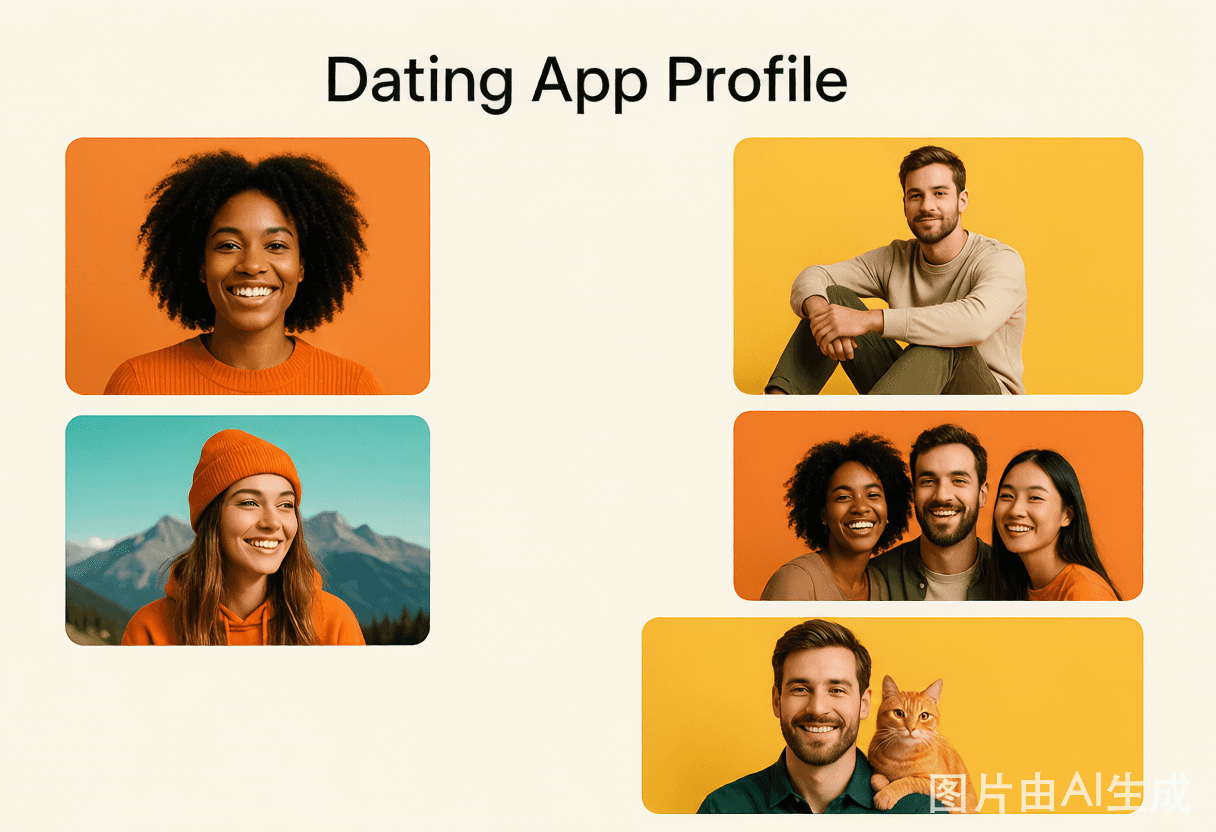
- Photo quality. Resolution, sharpness, and noise. Blurry or pixelated photos read as low effort and get skipped fast, regardless of who is in them. Quality is a threshold signal — below a certain line, nothing else about the photo matters.
- Face visibility. How clearly your face and eyes are visible. Eye contact is a trust signal; sunglasses, heavy filters, or distance from the camera all weaken it. A lead photo where the face is not readable almost never earns a second look.
- Expression. Whether your expression reads as warm and approachable or neutral and closed-off. A smile or warm expression earns more swipes and first messages than a neutral or serious lead, especially on Bumble where women message first.
- Composition. How the subject is framed within the photo. A centered subject with a simple background survives the card and grid crops every app applies; a cluttered or off-center frame pulls attention away from you.
- Lighting. Whether the light is even and flattering or harsh and uneven. Backlighting, dim rooms, and on-camera flash all flatten a photo and make a viewer read it as lower quality than it is.
- Background. What is behind you and whether it helps or hurts. A clean or interesting background keeps the focus on you; a cluttered, messy, or distracting background pulls attention away and reads as low effort.
- Trust signals. The small cues that read as honest and real — a real setting, a candid moment, unaltered skin. Filters that alter your face create a trust gap that widens when you meet in person.
- Photo variety. How different each photo is from the others in your set. Repeating the same angle, outfit, or setting across photos reads as thin even if each individual photo is fine; a set that mixes solo, full-body, activity, and social shots reads as complete.
These eight signals are not a secret formula — they are the same signals a thoughtful friend would use if you handed them your phone and asked which photos to keep. The difference is that the analysis applies them consistently and at scale, across every photo in your set, without the bias of knowing you.
How the ranking is built
Once every photo has been read across the eight signals, the analysis builds a ranking in three steps.
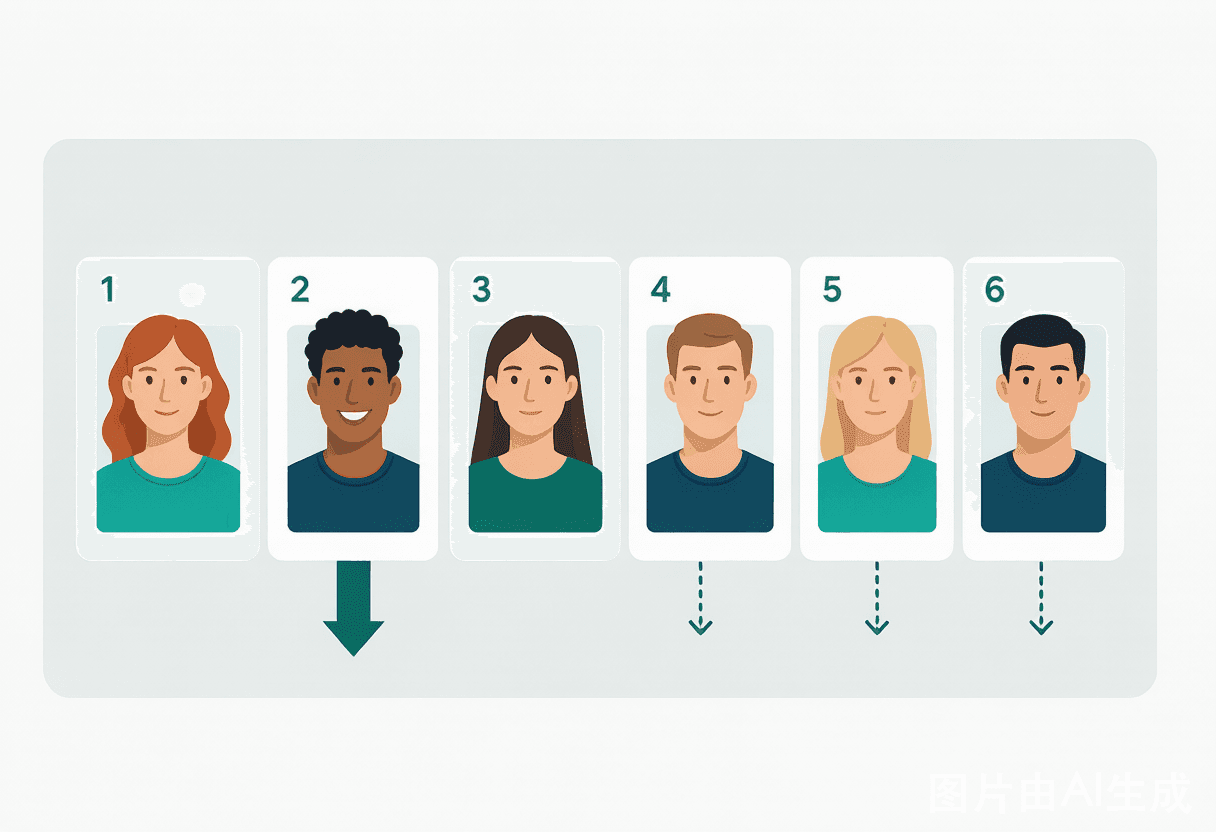
First, it weights the signals by slot. The lead photo is weighed most heavily on face visibility, expression, and quality, because those are the signals that decide the swipe. Later slots are weighed more on variety and context, because their job is to add information the lead photo did not. A full-body photo in slot two is read differently than the same photo in slot one.
Second, it flags the photos that are actively hurting. A blurry, heavily filtered, or outdated photo reduces matches just by sitting in the lineup. The analysis separates these from the photos that are merely weak, because the action is different — cut the first, reorder the second.
Third, it ranks the survivors. The remaining photos are ranked by how well each one would perform as a lead photo and in each subsequent slot, which produces a recommended order rather than just a score. The output is a sequence — lead, confirm, context, personality — not a leaderboard of attractiveness.
This is why two people with the same photos can get different analyses: the ranking depends on the set as a whole, not on any single photo in isolation. A photo that ranks third in one set might rank first in another, because what it adds depends on what surrounds it.
What a real analysis report looks like
A real analysis report is concrete, not vague. For each photo you upload, you should expect to see roughly the following.
- A per-photo read on each of the eight signals, in plain language. Not a single number, but a short note on what is working and what is not — "face and eyes clearly visible", "lighting is even and flattering", "background is cluttered and pulls focus".
- A clear flag on whether the photo is helping, neutral, or hurting. This is the most actionable piece, because it tells you whether to keep, reorder, or cut.
- A recommended slot for each photo. Which photo should lead, which should sit in slot two to confirm, which should fill the context and personality slots. This is the sequence, not just a ranking.
- A short list of concrete fixes. If a photo is close to working, the report flags what would push it over the line — better lighting, a simpler background, a clearer view of the face.
The point of the report is to leave you with a ranked lineup and a short to-do list, not a score. If you walk away knowing which photo leads, which to cut, and how to order the rest, the analysis did its job. For a worked example of how a hypothetical set gets ranked, see the example analysis section on the AI dating profile review page.
What AI photo analysis cannot do
An AI analysis is a powerful triage tool, but it is not a substitute for everything. It is worth being clear about what it cannot do.
- It cannot read context you have not given it. If a photo was taken at a meaningful event that matters to you, the analysis cannot know that — it can only read the photo. A photo that ranks low can still be the right choice if its context matters to you.
- It cannot manufacture a better photo. The analysis ranks and orders the photos you already have. If every photo in your set is weak, the best output is "cut most of them and shoot new ones", not a magic reordering.
- It cannot predict your match rate. The ranking reflects how strongly each photo sends the signals viewers use; it does not predict how many matches a given lineup will produce, because that depends on your audience and your profile text too.
- It does not rate your attractiveness. The eight signals are about clarity, trust, and approachability, not about looks. A clear, honest photo of an average-looking person outperforms a blurry, over-filtered photo of a more attractive person almost every time.
Knowing these limits makes the analysis more useful, not less. It is best used as a fast, objective first pass that removes the guesswork on the signals viewers judge fastest, leaving you to make the final calls on context and feel.
When an AI analysis is worth running
An AI analysis is worth running whenever you are about to publish or refresh a dating profile and you are not sure which photos to lead with. The most common situations are:
- You are setting up a new profile and have a folder of candidate photos but no clear sense of which should lead.
- Your match rate has dropped and you suspect your photos rather than your profile text.
- You are switching apps — moving a Tinder set onto Hinge or Bumble — and want to know which photo should lead on each.
- You have not updated your photos in over a year and want a fast, objective read on which of your current set still works.
In each of these, the value of the analysis is not a score — it is a ranked list and a cut list, produced in seconds, that turns a guessing game into a sequence of concrete decisions. If you are about to invest time in a new profile, that is exactly the kind of first pass that saves you from leading with the wrong photo.
Want AI to order your photos?
Not sure what order your photos should be in? ProfileFixAI ranks every photo you upload into the right order for Tinder, Hinge, or Bumble — lead photo, middle, and what to cut. Get your photo order →
FAQ
How does AI analyze dating photos?
ProfileFixAI reads each photo across eight standardized signals — photo quality, face visibility, expression, composition, lighting, background, trust signals, and photo variety — then ranks every photo in your set and tells you which should lead, which to cut, and how to order the rest.
Does AI rate how attractive I am?
No. The analysis does not score your attractiveness on a numeric scale and does not generate fake AI photos of you. It reads the visual signals a viewer actually uses to decide whether to keep looking in under a second.
Can AI tell which photo is best for Tinder, Hinge, or Bumble?
Yes. Because each app shows and weighs photos differently, the analysis can flag which of your photos should lead on each platform — clarity on Tinder, conversation potential on Hinge, approachability on Bumble.
Does ProfileFixAI store my photos?
No. Photos are processed to produce the analysis and are not stored as a persistent gallery. The product is privacy-first by design.
How accurate is AI dating photo analysis?
It is most accurate as a ranking and triage tool — telling you the lead photo, the photos to cut, and the order of the rest. It is not a substitute for your own judgment on a photo you know the context for, but it removes the guesswork on the signals viewers judge fastest.
FAQ
How does AI analyze dating photos?
ProfileFixAI reads each photo across eight standardized signals — photo quality, face visibility, expression, composition, lighting, background, trust signals, and photo variety — then ranks every photo in your set and tells you which should lead, which to cut, and how to order the rest.
Does AI rate how attractive I am?
No. The analysis does not score your attractiveness on a numeric scale and does not generate fake AI photos of you. It reads the visual signals a viewer actually uses to decide whether to keep looking in under a second.
Can AI tell which photo is best for Tinder, Hinge, or Bumble?
Yes. Because each app shows and weighs photos differently, the analysis can flag which of your photos should lead on each platform — clarity on Tinder, conversation potential on Hinge, approachability on Bumble.
Does ProfileFixAI store my photos?
No. Photos are processed to produce the analysis and are not stored as a persistent gallery. The product is privacy-first by design.
How accurate is AI dating photo analysis?
It is most accurate as a ranking and triage tool — telling you the lead photo, the photos to cut, and the order of the rest. It is not a substitute for your own judgment on a photo you know the context for, but it removes the guesswork on the signals viewers judge fastest.
Want AI to choose your best photo?
Upload your photos and get a photo-by-photo ranking and fix list for free.
Analyze Your Photos Free